


Architecture
Roller Shutter Installation Day: What to Expect
Roller Shutter Installation Day: What to Expect

Roller Shutter Installation Day: What to Expect from Start to Handover
A professional roller shutter installation day should feel organised, respectful, and clear. You should know what the team will check, which parts will be fitted, and how the system will be tested before handover. That structure matters in a family home, a luxury villa, a holiday property, or a commercial opening.
At Egypt Shutter, installation forms part of the complete product experience. The process begins before the technicians arrive. It continues through measurement checks, component fitting, motor setup, repeated testing, and a short explanation for the owner. Therefore, the goal is not simply to finish quickly. The goal is to leave you with a stable, aligned, and understandable system.
Before Roller Shutter Installation Day
Preparation helps the appointment run smoothly. The team should already understand the opening size, installation position, selected slat, motor, box, guides, and access requirements. The customer should also confirm whether the area is ready for work.
Move fragile objects away from the window where possible. Clear furniture that blocks the working area. If the opening sits behind a gate, inside a managed community, or on an upper floor, share the access instructions in advance.
The team may also need to review the electrical route and the location of the control point. For a motorised shutter, the final arrangement should suit the building and the selected control method. Early clarity reduces interruptions during fitting.
The Arrival and Site Check
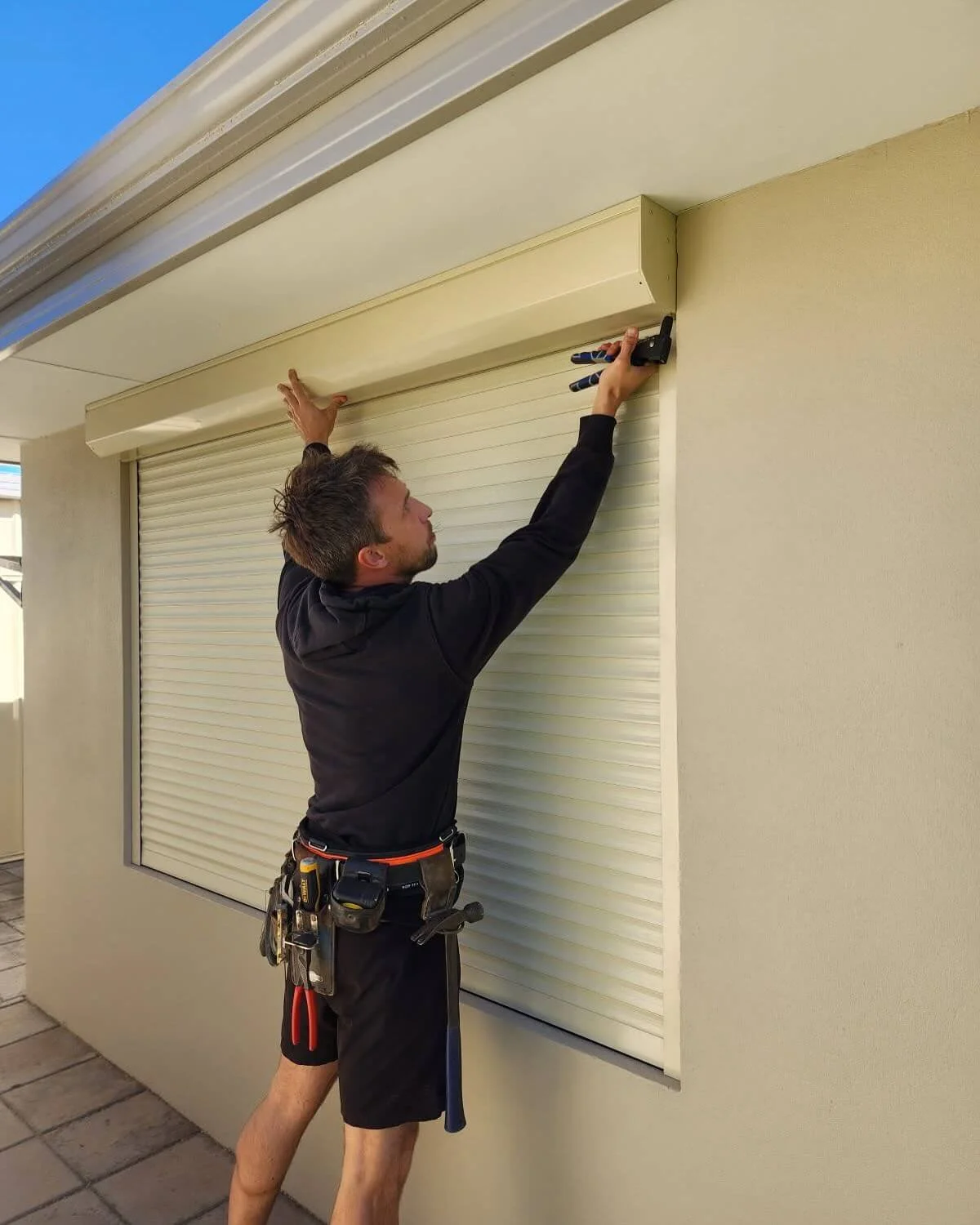
When the team arrives, the first step should not be drilling. The installers need to review the opening and compare it with the approved measurements. They may check the width, height, depth, side clearance, wall condition, and available fixing points.
This review helps identify changes that occurred after the original survey. Finishing layers, tiles, paint, or electrical work can sometimes affect the available space. If a condition differs from the specification, the team should explain it before proceeding.
A careful site check protects the appearance and movement of the final system. It also gives the customer a chance to ask questions before the work begins.
Protecting the Property During the Work
A premium installation should respect the property. The team should handle the shutter components carefully and keep the working area as controlled as possible. Smooth glass, painted walls, frames, and finished floors deserve particular attention.
A suction cup can help installers handle smooth surfaces with better grip and control. A hanger, bracket, or supporting fixture can help hold an assembly while the team secures it. These tools may disappear from view after the project, yet they support a cleaner installation.
The customer should also know how the team will manage packaging, dust, and small installation materials. Clear working habits create confidence before the shutter even begins to move.
Fitting the Frame, Box, and Side Guides
The frame creates the visual boundary around the opening. It also supports the guides and helps establish the correct line for the curtain. The selected box must fit the opening and the shutter assembly without creating an awkward finish.
Side guides keep the curtain moving along its intended path. They should remain parallel, secure, and appropriate for the wall condition. If a guide sits out of alignment, the curtain may rub, tilt, or create unnecessary noise.
For that reason, installers should check the relationship between the frame, box, guides, wall, and window. A clean line is not only a design detail. It also supports smoother movement.
Installing the Tube and Motor
The tube carries the curtain as it rolls. Its size and compatibility must match the shutter, box, motor, and opening. The motor sits inside the tube, so the installer must use the correct adapters, brackets, and connection method for the selected motor family.
Torque and operating requirements should already have been reviewed during the specification stage. A wide or heavier curtain may need a different motor from a smaller bedroom opening. Similarly, a property that uses the shutter several times each day may need a different operating consideration from a rarely occupied holiday home.
Somfy’s official support resources place installation, setup, and documentation at the centre of reliable motorised shutter operation. SIMU’s catalogue also distinguishes motor options by factors such as torque, application, diameter, and control format. Consequently, the installer should treat the motor as part of a complete system rather than as a last-minute accessory.
Checking the Curtain and Bottom Bar
Once the curtain is fitted, the team should check its movement through the guides. The slats should travel without catching. The bottom bar should meet the lower position cleanly and maintain a consistent closing line.
Small movement problems can reveal larger alignment issues. Therefore, the installer should not rely on one quick cycle. Several opening and closing cycles provide a better view of the system’s behaviour.
The team should also check the visible finish from inside and outside. A premium result should look considered from both sides of the opening.
Motor Controls and Limit Settings
The motor needs correct direction setup and upper and lower limit adjustment. The installer should confirm which command opens the shutter and which command closes it. The system should stop at the intended positions without unnecessary strain.
Depending on the chosen product, control may use a wall switch, remote control, wired connection, or a compatible automation system. The selected arrangement should match the motor, electrical installation, and customer expectations.
During testing, the team should listen for unusual noise and review the response of the control. If the system does not behave as expected, the installer should investigate before handover.
What Happens at Handover?
A proper handover includes more than saying that the work is finished. The customer should see the shutter open, close, stop, and respond to its control. The team should explain basic operation and simple care.
You should also know what to do if the shutter develops resistance, unusual noise, uneven movement, or a control issue. Avoid forcing the system. Instead, contact the appropriate service channel and describe the symptom clearly.
This explanation turns a technical installation into a usable part of the home. It also gives you confidence that the system has been checked rather than simply attached to the opening.
“Good installation is quiet, precise, and almost invisible. You notice the comfort because the details have been handled”.
Egypt Shutter installation principle
AEO Quick Answers
What happens on roller shutter installation day?
The team reviews the opening, protects the work area, fits the frame and guides, installs the box, tube, curtain, and motor, adjusts the limits, tests movement, and explains operation.
Should the measurements be checked again?
Yes. A final site check can identify changes in wall finish, access, electrical work, or available clearance before fitting begins.
Why are suction cups and hangers used?
They help installers handle smooth surfaces and support assemblies during fitting. This can improve control, alignment, and protection of the finish.
How long does roller shutter installation take?
The duration depends on the number and size of openings, access, product choice, electrical work, and site conditions. The appointment timeline should be confirmed after reviewing the project.
What should be tested before handover?
The team should test opening, closing, stopping, limit positions, alignment, control response, and unusual noise. The customer should also receive basic operating guidance.
Prepare for a Better Installation Experience
A well-planned appointment makes the installation easier for everyone. Contact Egypt Shutter to arrange a measured survey, confirm the specification, and understand what your installation day will involve in the Red Sea region.
Request your installation plan today and enjoy a shutter system fitted with care from the first measurement to the final test.
Author
Ibrahem Elgoushy
Director
Categories
Popular Posts
September 26, 2026
Roller Shutters vs Curtains for Red Sea Villas
September 16, 2026
Fast Shutter Installation in the Red Sea

Related posts

April 6, 2026
Uncompromising Luxury Home Security in the Red Sea

April 16, 2026
Smart Living Redefined: The Benefits of Automated Roller Shutters in El Gouna

April 26, 2026
Architectural Harmony: Roller Shutters into Red Sea Design

May 6, 2026
Long-Term Value of Premium Roller Shutters

May 16, 2026
Sustainable Luxury: Eco-Friendly Roller Shutters for Red Sea Homes
May 26, 2026
Preserving Paradise: Essential Maintenance for Luxury Roller Shutters in Coastal Homes

June 6, 2026
German Engineering Roller Shutters for Luxury Homes

June 16, 2026
The Art Personalizing Your Roller Shutters in El Gouna

June 26, 2026
Roller Shutters Sleep Quality: Enhance Rest in Red Sea Homes

July 6, 2026